Tuesday, October 3, 2017

Diverse Reads for Adolescents

Diverse books can help young people develop positive beliefs about cultures, races, and social identities that differ from their own. Additionally, research shows that diverse books are often more enjoyable reading experiences. People like to read about other people who are different from them and have different lived experiences. Intuitively, I think this makes a lot of sense. I don't want to read about a life just like mine, I live that every day. 

Today, I'm sharing three of my favorite diverse books for adolescent readers. These books are each told through the lens of someone with a different life experience than my own. They also tackle big issues in accessible ways, so are great for starting difficult conversations with teenagers. Best of all, each of these books is written by a person of color, who can speak on the topic from their own experiences. 


Piecing Me Together by Renee Watson


One of the book clubs I'm a member of read this book as our YA pick last spring. I hadn't heard of this book at that point, and just wasn't too sure about it. However, I LOVE YA, and I love my book club so I gave it a try. It was one of the best surprises and one of the best YA books I've read this year. 

First of all, let's talk about that cover. I'm not usually one to choose a book based on the cover. In fact, I actually prefer books that are simply one solid color; however, I think this is such a cool, artistic cover. I like seeing this book on my shelf. 

In this book, we meet Jade, a teenager who lives in two worlds. She is one of only a handful of Black students to attend a private school outside of her neighborhood. Jade attends on a scholarship and must constantly walk the line between her home life and her school life. One thing I appreciated about this book is the discussion of providing opportunities based on "false empathy". Jade gets annoyed that she receives different programs and is expected to be overly grateful for them, just because is Black. In particular, Jade is selected to be part of a women's mentoring program, in which she will be mentored by a former female student who graduated and is now successful. Jade isn't too sure about this program and finds her mentor to be very distracted and self-absorbed with her own life concerns. 

This book is so good because the characters engage in tough conversations about race, class, and being a woman in the 21st century. All topics I think should be discussed more and should be discussed with teenagers. The book is bold when it needs to be and quiet when it needs to be, and provides enough information to let the reader make up his or her mind about the topics. I highly recommend this book for teenagers and adults. 


The Hate U Give by Angie Thomas

Alright, the only way you haven't heard of this book is if you've been living under a rock during 2017. Undoubtedly, this is THE YA book of 2017. I pre-ordered this one and could not wait to get my hands on it. Angie Thomas tackles hot-button issues in such a real and fascinating way. Similar to Piecing Me Together, we have a high school student, Starr, who lives in multiple worlds. She attends a school outside of her home neighborhood and constantly straddles the line between her two worlds. 

One night, Starr is at a party with some of her neighborhood friends, and she bumps into an old friend, Khalil. When Starr is ready to leave the party, Khalil gives her a ride home. They are pulled over by a cop, who says Khalil was speeding, which he wasn't. The cop forces Khalil to get out of the car and when Khalil turns to ask Starr if she is okay, the cop shoots Khalil. He does not survive. This act becomes a major news story and Starr becomes the sole witness of the account. The communities erupt and take sides on the issue, and Starr is stalked by the media. Fake news, race issues, police use of deadly force, and freedom of speech are all tackled in the story that follows. 

This is a bold book, and I recommend teenagers be encouraged to have the tough discussions that will certainly follow. There is a lot to chew on in this book and Thomas provides multiple perspectives. Once again, I highly recommend this book for teenagers and adults alike and think it would greatly help our society have some of the discussions we desperately need right now. 


The Inexplicable Logic of My Life by Benjamin Alire Saenz


I have loved Saenz every since reading Aristotle and Dante Discover the Secrets of the Universe. First, I want to talk about that title. I'm obsessed with Saenz's titles - they are always powerful and make me want to dig right in. The book is just as good as the title.

We meet Sal, a Mexican-American teenager with a single father who is openly gay. Sal's father is an amazing character; he is thoughtful, caring, compassionate, and presents choices in a way that help his son make the right choice. However, he is deeply sympathetic when Sal messes up and helps him work to be a better person. Sal has a pretty great life, but everything begins to change as he enters his senior year of high school. Sal's best friend is Samantha, and they are mostly inseparable. However, as they begin to think about their futures, they become uncertain of how to remain friends. Their relationship is completely plutonic, which I appreciate for showing teenagers that friendships with the opposite sex are valuable. 

Over the course of the book, Sal struggles with applying to college, discovering his beloved grandmother is dying of cancer, helping Samantha deal with her complicated relationship with her drug-addicted mother, and assisting a friend who he discovers is homeless. Big issues! Sal also has to reconcile his feelings toward his father's old friend (and he discovers former boyfriend) who mysteriously comes back into their lives.

Once again, I love this book because it tackles so many issues. Sal's father is the parent I hope to be someday - he's that good of a person. The book discusses lots of perspectives on parents; Sal's father is single and gay, Samantha's mother is a drug-addict who is always in a domestically abusive relationship, and another classmate is in a home stricken by deep, systemic poverty. These are all issues that teenagers deal with, either personally or through friends. At the same time, all of the teenagers are working to figure out who they are, who they want to be, and what they want to do once they graduate high school. 

This book was so good, I could not stop reading. Saenz's writing is so good, and I was so sad when I finished reading. Saenz also knows how to pull the emotions, so there were definitely tears involved. 


It's important to help teenagers and young adults learn about the world around them, and diverse books can help accomplish that goal. Each of these books are perfect for starting those conversations, but are equally important for adults to read. 

Happy Reading! 


Friday, September 29, 2017

Adult Nonfiction Review: Reading People

My primary focus with this blog is to review and recommend books for children. My vision is that parents, teachers, and caregivers can find titles that are engaging and motivating for the kids in their lives. However, I also believe that in order for adults to inspire children to read, they themselves must be readers. 

Therefore, I will also share reviews and details on titles I love here on the blog. Research shows that when kids see adults around them reading, they develop value for reading. Also, that action encourages them to use their free time for reading. 

Today, I'm sharing a brand new nonfiction release (in stores as of September 19). The book, Reading People: How Seeing the World Through the Lens of Personality Changes Everything, was written by a book blogger I have been following for a few years, Anne Bogel at Modern Mrs. Darcy. This book is all about personality and how understanding personality helps us know ourselves and others better. 

Let me begin by saying I love studying personality. In college, I was a psychology minor and one of my all time favorite courses was entitled "Personality". In fact, my favorite part of studying psychology was understanding the inner workings of why people are the way they are. My first big "ah-ha" moment about personality came as a freshman in college. I was a business major at the time (that didn't last long) and as a first-year requirement, was part of a professional learning community of other freshman students. We had upper classmen mentors, and one of our first tasks was to take the Strengths Finder (discussed in Reading People). I took the test, got my five top traits (Input, Achiever, Learner, Futuristic, Activator). I remember thinking "that is spot on, how cool!". In our group meeting that week, we were supposed to discuss our traits, and I was floored to learn my traits were vastly different from everyone else's. Most of the other group members shared at least one or two top traits, but none with me. It was so eye-opening, and definitely led me to do some reconsidering on my major. Three months later, I changed my major and never looked back. 

Today, I am fascinated about learning how personality works. I want to know more about my own personality to better understand how I operate and how to be more efficient in work. As I have gotten older, though, I also appreciate how understanding allows me to know other people, my colleagues, friends, and students. Particularly when I become frustrated with someone, I turn to personality as a way to evaluate the situation and proceed with a response. Reading People has definitely made this information much easier to understand. 


by Anne Bogel


Confessions time, when I first heard about this book and that it would cover personality, I was a bit skeptical. The book covers differences between extroverts and introverts, highly sensitive people, love languages, Kiersey's temperaments, Myers-Briggs, cognitive functioning, Strength's Finder, and Enneagram. My skepticism was - "isn't this information available separately? and free? and everywhere?" As a personality junkie, I'd explored these before and in detail (though not Enneagram). I honestly didn't see how having all of these measures in one place would be beneficial. I'm glad I gave this book a chance because I was pleasantly surprised. 

It was so much fun to read chapter by chapter about different personality measures. The book is also formatted so that each measure builds on itself. I think, in many ways, it approached personality as easiest to most challenging paradigms. I definitely struggled a bit to place myself in cognitive functioning and Enneagram. I'm not 100% sold on the cognitive functioning, but I can accept my results for now. 

Anne's explanations are very clear and easy to follow. She also provides background information and relatable vignettes that address common misconceptions and issues. For example, she describes how people often mislabel themselves in Myers-Briggs. I can relate to this because I have struggled for a while to decide between an INTP or INTJ. With her explanations and seeing how cognitive functions and Kiersey's temperaments relate to Myers-Briggs, I was able to confirm I'm an INTJ. 

In short, this book is really fun and so pretty, which is always a nice bonus. I think this is a nice introduction to personality for people who may not know where to start. I also think junkies will like seeing the measures next to each other - it's fun to compare and contrast in that way. 

For teachers and parents, this book can be a useful tool to better understanding yourself and the children in your life. Sometimes, personality sheds light on behaviors by providing a rationale for why a child acts the way he or she does. Understanding personality can also help adults see how their personality complements or challenges a child's. This book is a great place to start for understanding those similarities and differences.

Happy Reading!


Tuesday, September 26, 2017

Review: Ghosts of Greenglass House

*I received a copy of Ghosts of Greenglass House from Netgalley in exchange for an honest review. All opinions are strictly my own.*


Today, I am sharing a fun, fall-appropriate series for upper elementary and middle school readers - it's the Greenglass House series! Greenglass House is book 1, and Ghosts of Greenglass House will be released on October 3, just in time for a cozy, fall mystery. 


                                                      Greenglass House by Kate Milford


I first saw Greenglass House mentioned on a blog as a cozy read for fall, and that got me interested. It did not disappoint! In this first book, we meet Milo and his side-kick, Meddy. They both live in the Greenglass House, a mysterious old house that appears to come alive with secrets. Greenglass House is an inn, but typically remains quiet during the winter months when the book opens. However, on a mysterious evening, many strange visitors approach the house out of nowhere. As the visitors arrive, other strange happenings occur and objects begin disappearing from the house. Milo and Meddy set out to figure out the mystery. 

This book is so fun! It has elements of fantasy and mystery rolled up for young readers. This book would be most appropriate for older elementary or middle level readers. The content is easy, but the book is a little on the longer side (almost 500 pages) so a child would need to have developed some reading stamina. The chapters are also a little longer than usual for a middle grade book, so this could be a good gateway book to more advanced reading material. 


                                             Ghosts of Greenglass House by Kate Milford


Look at that cover! These books are so perfectly created for cooler weather and comfy reading. As an educator, I believe motivation is key to developing life-long readers, so I love an inspiring cover. 

Again, in this sequel, we meet Milo and Meddy during the winter holidays at Greenglass House. They are off on another adventure involving strange house guests, ghosts, and missing objects. In addition to a fun, twisty mystery, though, this book begins to tackle some issues that Milo encounters as he becomes a teenager. He is adopted and, in this book, the reader gets to see him questioning his parentage and heritage. This struggle with identity is great to explore with older readers, moving into adolescence. Milo also faces a conflict with a teacher that drives much of the emotional narrative. These are relevant issues that many children work through in school. 

This sequel did not disappoint and I know fans of Greenglass House will really enjoy the follow-up. These are such fun reads for kids, perfect for the changing temperatures outside, and engaging for adults as well. 

Happy Reading! 

Monday, September 25, 2017

Review: The Thing Lou Couldn't Do

*I received a copy of The Thing Lou Couldn't Do from Netgalley in exchange for an honest review. All opinions are strictly my own.*

Picturebooks are a great way to engage kids in reading early. 

Over time, our view of children and their role in society has shifted. Historically, children were thought to be tiny adults, so books were not created specifically with children in mind. Today, childhood is a cherished part of life, and books reflect that. Many children's books are designed to elicit imagination and build character traits.

Today, I'm reviewing a new picturebook by one of my favorite picturebook authors, Ashley Spires. Her books teach kids lessons in developing character traits that are positive and will help them blossom into creative, successful adults. 


The Thing Lou Couldn't Do by Ashley Spires


In this book, we meet Lou, a bright, courageous young girl. Lou is confident and does not shy away from difficult tasks. However, one day, she needs to climb a tree and becomes instantly paralyzed by the task. She has never climbed a tree before and she is not sure she can do it. She is afraid of falling and getting hurt. Will she be successful and attempt climbing the tree or not?

What I love about this book is that it teaches children about self-efficacy (a person's confidence in his/her ability to complete a task) with a task that is very approachable to young readers - climbing a tree. Self-efficacy is a distinguishing factor among successful and unsuccessful people, so it is important to develop in young children. 

I also love that this book shows diverse characters! The children in the book all look different from each other and represent different ethnicities. This feature makes the book very approachable and appropriate for many readers. 

I highly recommend this book for home reading and classroom use! I also encourage people who enjoy this book to pick up some of Ashley Spires' other titles - you will not be disappointed! 

Happy Reading! 


Thursday, September 21, 2017

Review: Laura Ingalls is Ruining My Life

*I received a copy of Laura Ingalls is Ruining My Life from Netgalley in exchange for an honest review. All opinions are strictly my own.*


Happy Review Day here on Dr. Hodges Reads! Today, I am reviewing an advanced copy of Laura Ingalls is Ruining My Life by Shelley Tougas. This book will be released on October 10, 2017!

To begin, I want to say that the reason I requested this title is because I am a huge fan of the Little House series. When I was in 2nd grade, I began reading these books and could not get enough of them. I remember being proud of myself for tackling such a large book (these topped out over 300 pages, y'all), and how many feelings I had while I read. The perils of the prairie and the sacrifices the Ingalls family made kept me coming back for more.  

Once I finished the series, the love of reading was deeply ingrained in me, and I needed more books. This sparked a rush on reading the classics of the time - The Wizard of Oz, A Little Princess, The Secret Garden, and Little Women. I believe many of these books shaped me as a reader and truly helped foster my love of reading. 


                                            Laura Ingalls is Ruining My Life by Shelley Tougas


In Laura Ingalls is Ruining My Life, we meet Charlotte Lake. Charlotte and her family are nomads, constantly moving to new cities for her mother's passion. Charlotte's mother wants to be a published author and wants to write a book about Laura Ingalls, who was inspirational to her as a child. Charlotte is embarrassed by her mother's obsession and frustrated at always having to start a new school and new life. She never feels like she fits in anywhere. To complicate her life more, she has a twin brother who has taken a vow of silence, since he feels his voice is not being heard in the moves, and a younger sister who is perfect. Charlotte struggles to make friends and find her niche among so many moves. 

The family has now relocated to Walnut Grove, one of the places Laura Ingalls grew up. It houses a Laura Ingalls museum that hosts an essay contest each year. In a spark of brilliance, Charlotte decides to enter the contests and win the grand prize of $500. She knows this money will change her family's life and maybe help her mother put down some roots. As the contest deadline nears, Charlotte becomes very ill with the flu and misses over a week of school, and time to create her essay. At the last moment, she furiously scribbles out the line, "Laura Ingalls is ruining my life," and turns that in as her essay. Her clever teacher reads this and probes Charlotte to write more and dig deeper, which she does. 

I won't spoil whether Charlotte wins or loses and what happens next...you'll have to read yourself. Overall, I found the book to be sweet and very appropriate for elementary readers. I also think this would make a fun read-aloud, as the problems Charlotte faces are typical of elementary children. While my love for Laura Ingalls runs deep, this was a difficult book for me to review, so I'm going to approach this review from two perspectives. 

As a child who grew up loving Laura Ingalls, this was an amazing read. I really enjoyed getting to see the Little House books from the perspective of Charlotte's mother. She is the child, like me, who grew up reading and loving these books. I liked getting to see a new generation fall in love with this series and see how the new generation questions the books. Charlotte completes a social studies unit in school that focuses on the native tribes during the Ingalls pioneering journey. I also liked the references to the books, which made me remember details I hadn't thought about in a while.

As an educator, I'm not sure who to recommend this book to. One phenomenon I see now is revitalizing classics with retellings or inspired books such as this one. However, a person who grew up reading Little House is not the intended audience, it's kids today. I would only want a child who had read the Little House books to read this book, because there are spoilers (such as Mary going blind). I wouldn't want those to be spoiled for a child who might read the series. At the same time, this book is intended for a young, elementary audience. I don't think an older child who read the Little House books would enjoy this book because the problems the character faces are very much at the elmentary school level. 

In short, I liked this book and would definitely want it in my classroom and in the hands of kids. However, I would be pretty selective on who I recommended this book to and at what point I gave this book to a child. If the spoilers to the Little House books were removed, I think this could be a great gateway to that series. 

I gave this 4/5 stars on Goodreads! Happy Reading!


Sunday, September 17, 2017

Review: Refugee by Alan Gratz

Oh, this book. Sometimes, a book comes along that really grips my heart. Sadly, the more I read, the less common this bookish encounter is, but I relish it each time. Refugee is one such book. This book grabbed me from page one, and I did not want it to stop. My heart hurt for the characters, and I wanted them to have happy endings. 

This is also the second book I have read by Alan Gratz in about a month. Both were amazing and approached topics that children are interested in and want to know more about. The first was Ban This Book about the consequences of banning books from school libraries. Refugee provides an outlet for talking to children about immigration and helping them develop empathy for people who leave their homes and lives behind. 

Refugee is also a book I recommend teachers read as it will give them better insights into their students' and what those students may have experienced before arriving to the classroom. 


Refugee by Alan Gratz


Refugee follows the stories of three children who become refugees with their families, seeking help from terrible circumstances. In all three stories, the children and their families face unimaginable struggles and hardships. They must make decisions that most people could not even fathom making, and in all three stories, some of their family is lost. These stories broke my heart but opened my eyes to some of the perils I wouldn't have known otherwise. Leaving life behind can come with more dangers, but also hope for something better.

Gratz deftly handles these difficult issues, and does not necessarily leave the reader with hope in the end. In fact, from my reading, none of the children had great hope at the end of their journeys. 

First, we meet Mahmoud, a Syrian child living in present-day Aleppo, which is being devastated by rebel forces. When his home is destroyed in an airstrike, his mother, father, newborn baby sister, and brother begin a long journey to Germany, a place they think will provide shelter and refuge. Their journey is challenging and they face as many dangers on the road as they did living in Aleppo. 

Second, we meet Isabel, a young Cuban girl living in Cuba in the 1990s. On the day Castro announces that all families may leave Cuba without penalty, her family joins a second family in sailing across the Gulf of Mexico. The two families leave in a raft-like boat made of old tin advertisements. As they leave Cuban shores, they are shot at by the police, filling their raft with holes. As they make their way to Florida, they realize they are not welcome everywhere and face prejudice just for being Cuban. 

Third, we meet Josef, a young Jewish boy living in 1940s Germany. Josef and his family are not given a choice, but forced to leave Germany on a ship called the MSS St. Louis. This ship sails across the Atlantic to Cuba, where the Jewish passengers are told they will be allowed to deboard and being new lives, away from the Nazis. If this story seems too good to be true, it is. As the passengers face great hardships on their journey to Cuba.

By describing three very different situations across many decades, Gratz helps the reader see parallels between the three children. They all face prejudice due to either their race or religion. Seeing that the same issues plague society today as they did in the 1940s should bring about conversations for change. 

I recommend this book for teachers who want to help children start these conversations and consider how to develop empathy in their students. The reading level is very simple and Gratz provides enough background and context to help students understand the three time periods. 

Friday, September 1, 2017

Using Picturebooks to Teach Science

Students in the United States are not doing well in science - in fact, only about 1/3 of students graduate high school at the proficient level in science. One way to improve students' science knowledge is to start them early. Teachers can integrate science content with their literacy instruction in early grades - through picturebooks! Fortunately, there are many picturebooks focused on science content. 


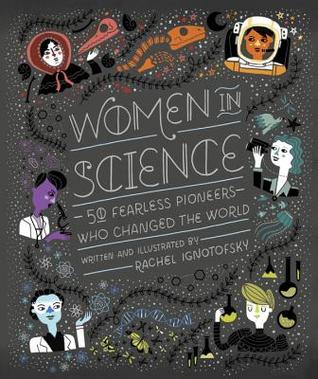
This book is amazing! In the front of this book, you will find a timeline of the women pioneers of science. This is a useful tool for teaching children about graphic organizers and sequence. Then, each woman is provided a page of detailed information. As a teacher, this is a book that could be used all year long to inspire and motivate kids. The teacher could choose to talk about a different science pioneer each day, or each week. This is also a great book to pair with others, that are more specifically about certain women or their contributions. Finally, I like this book for independent reading. It is the kind of book that kids could read cover to cover, or just pick up a read a few pages of. Either way, it is a great addition to any classroom. 


Rosie Revere, Engineer by Andrea Beaty 


This book is part of a trio of books that I love - all about people who do great things. In this one, we meet a young girl, Rosie, who turns every day items into something great. She views herself as an engineer and is ingenious in how she approaches things around her. Best of all, she understands that things don't work out perfectly the first time. Sometimes, it takes failure and trying again for things to work. I love those lessons for kids. In real scientific inquiry, failure is part of the game. Teaching children this from a young age can inspire them to work hard and not become discouraged. I also like the inspiration and creativity of Rosie, which many kids can relate to. It shows them that their thoughts and opinions are valued.


This book and its newer counterpart What Do You Do with a Problem? are great for introducing students to the scientific process. They are wonderfully illustrated, using color to emphasize major plot points, a way to help striving readers better understand the story. In this book, our main character has an idea. The idea begins small and only emerges occasionally. Over time, the idea grows and looms over the boy constantly. This is a metaphor for how we approach ideas - they start out small and insignificant, but as we think on them more, they grow. Eventually, they become a part of our life and we have to act on the idea. This is also how the scientific process begins - with an idea. It is important for children to understand that their ideas are worthwhile and important. I recommend using this book to get students thinking about ideas and what they can do with them. What Do You Do with an Idea? is both inspiring and motivating, so use that to your students' advantage. It can also be a great ice-breaker when getting students interested in scientific inquiry. 


Students need to start thinking about and reading science at a young age, and each of these books is a great way to get students' interest started.